Hidden water leaks in your home can cause substantial damage before you’re aware that they exist. However, no one wants to have their walls, floors, and ceilings torn up and their lives disrupted just to determine that there are no hidden water leaks. Is there a solution? Absolutely!
Quick Takeaways
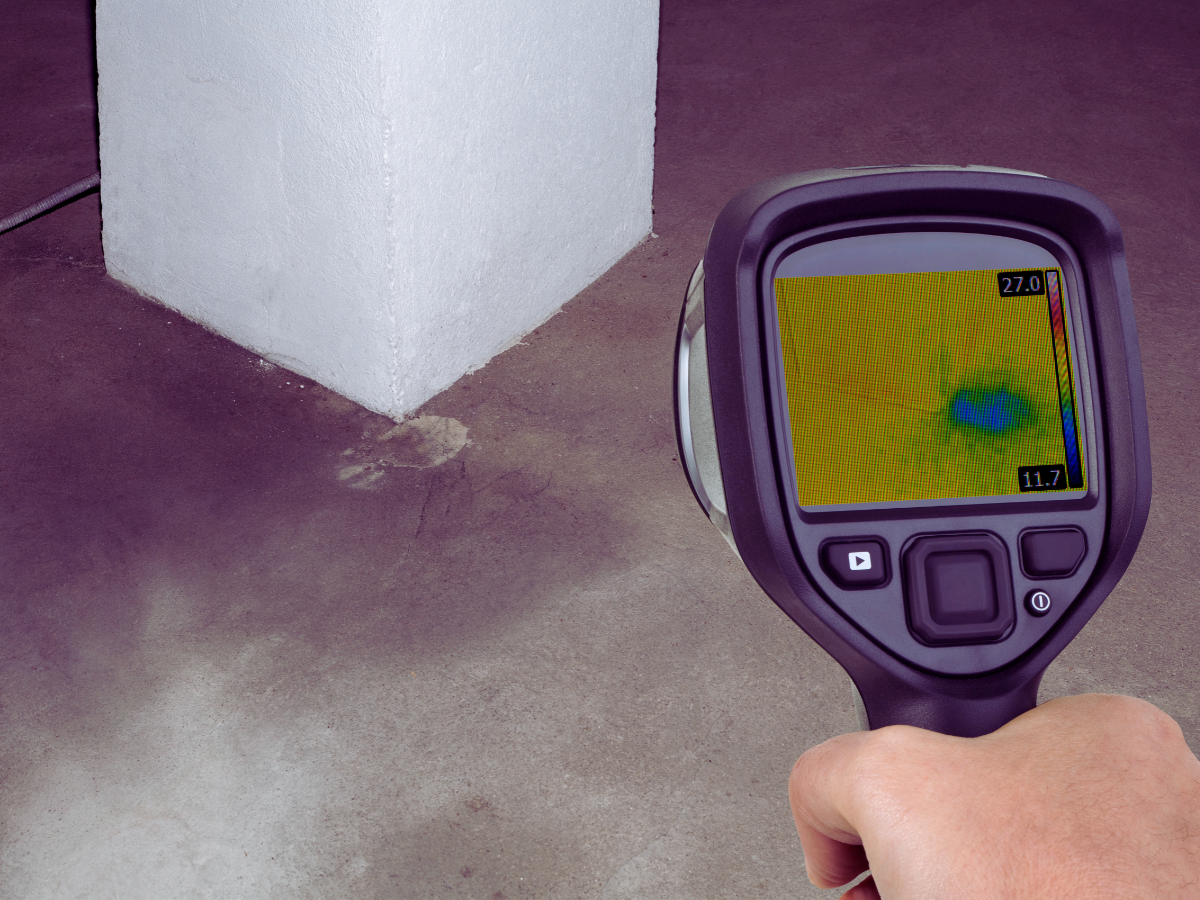 Modern methods of leak detection use non-invasive tools to locate hidden water leaks.
- Our punctual plumbers can usually locate a hidden leak without destroying your walls or floors.
- Modern procedures include the use of acoustic equipment, thermal imaging, and moisture meters to pinpoint the location of leaks.
- Early detection provides the best outcome and helps prevent costly repairs, damage, and mold.
- Professional leak detection can save time and money, as well as expensive repair work.
What Is Non-Invasive Leak Detection?
Non-invasive leak detection uses specialized equipment to locate hidden leaks. It doesn’t destroy drywall or flooring, but can detect temperature differences, locate water droplets, and detect the presence of rushing water. Other methods, such as tracer gas testing or video camera inspections, can also determine whether a leak is present.
Signs You May Have a Hidden Leak
If you notice any of the following, you may have a hidden leak:
- Damp areas on the floor or wall
- Mold growth
- Musty odors
- Unusually high water bills
- Water stains on the floor, ceiling, or wall
- Sound of running water
If you notice any or all of the above, call one of our punctual plumbers so we can help you.
How Leak Detection Works Without Opening Walls
The most common methods for non-invasive leak detection include the following.
Acoustic Leak Detection
Your plumber will use a sonic device to detect the sound of water moving inside your pipes.
Thermal Imaging Cameras
For several reasons, the presence of water will cause a temperature change in the surroundings. Thermal imaging cameras can detect areas with temperatures different from those of the surrounding areas.
Moisture Meters
A moisture meter can detect the presence of water that may be hidden by flooring or drywall.
Pressure Testing
Pressure testing fills the line with air or nitrogen, then uses a pressure transducer to measure any pressure loss in the line.
Can Leak Detection Find Leaks Behind Walls?
 Yes, using any of the above methods, and there are others, enables a plumber to accurately and non-invasively determine the location of leaks inside a floor, wall or ceiling.
Why Is Early Detection Important?
Early leak detection is essential to avoid water damage and the structural damage that can result when a leak continues. Water is one of the most destructive forces on the planet, and left undetected, can cause mold, rot, and structural damage such as weakened support beams or slab leaks.
Early detection can reduce or eliminate these types of issues and the expensive repair bills they cause.
When to Schedule Professional Leak Detection
If you notice any of the above signs, such as unusually high water bills, odd sounds, or musty odors, you should schedule an appointment with a punctual plumber to eliminate the possibility of a water leak.
Even though you may not see evidence of a leak, it can exist. It’s far better to pay for a service call than to ignore the signs and end up with serious water damage and expensive repairs.
FAQ
How do plumbers detect leaks without cutting open walls?
Depending on the circumstances, one of our punctual plumbers can determine the location of a water leak through the use of various detection tools, such as acoustic detection devices, moisture detection meters, and thermal imaging devices.
Can thermal cameras really find water leaks?
Yes. The presence of water in a wall, ceiling, or floor will cause a temperature change. Thermal imaging shows spots with a different temperature from the surrounding area.
Is leak detection less expensive than repairing water damage?
Yes. Leak detection does no damage to your ceilings, floors, or walls. None of the tools used will destroy these items; they are diagnostic tools only. Repairing a floor, ceiling, or wall can be extremely expensive, especially if you have to match tiles, paint, floor covering, and so forth, after repairs have been completed. Leak detection also pinpoints the location, so only areas with leaks will need to be repaired.
What causes hidden plumbing leaks behind walls?
Many factors can cause plumbing leaks, including corroded pipes, aging plumbing, loose fittings, and high water pressure. Plumbing leaks are not always preventable unless you use proactive measures such as non-invasive leak detection.
How long can a hidden leak go unnoticed?
This answer depends on several factors. The location of the leak, how long it has existed, the severity of the leak, and whether it’s in a prominent location or a remote one. Leaks can exist for weeks or months before the damage is apparent.
Schedule Leak Detection in Gainesville, FL Before Hidden Damage Spreads
 Hidden leaks won’t appear when it’s convenient. If you think you might have a hidden water leak, don’t wait until you see evidence of it. Be proactive and get non-invasive professional leak detection from Benjamin Franklin Plumbing in Gainesville, FL, and the surrounding areas.
Our punctual plumbers will arrive on time and can prevent the substantial damage that a small water leak can cause. Call us today for some of the best service you’ll ever receive!