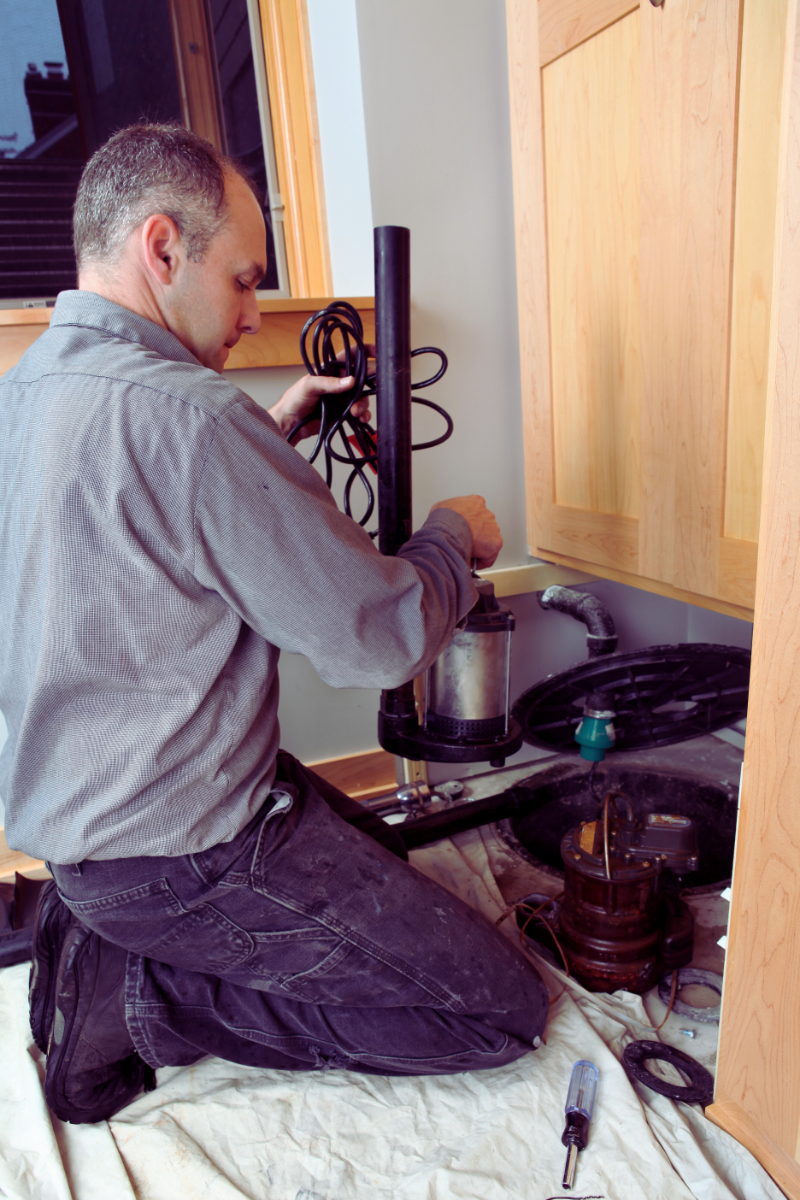
 Your sump pump plays a crucial role in keeping your basement protected against flooding. And while some noise is quite normal, it shouldn’t sound like a construction site as it cycles on and off.
Any rattling, grinding, or excessive humming should prompt you to book professional service right away.
Quick Answer: Why Is My Sump Pump So Loud?
Loud sump pumps usually have mechanical issues or loose components that stem from installation mistakes or a lack of maintenance. Banging and humming noises frequently trace back to vibrating pipes, worn motors, or faulty check valves. Identifying the root cause of the noise is crucial to restoring quiet operation and preventing costly damage.
- Loose or vibrating discharge pipes
- Check valve clatter
- Impeller damage or debris
- Float switch problems
- Motor wear
- Pump running dry or slurping air
- Incorrect pump size or installation
- Continuous operation / short cycling
- Old or low-quality pump design
9 Reasons Your Sump Pump Is So Loud (and the Fixes)
Have no fear if you hear your sump pump being louder than normal—the majority of problems have simple solutions.
1. Loose or Vibrating Discharge Pipes
Unfastened pipes will pound on adjacent surfaces as water flows through.
Fix: Add brackets, insulation, or rubber grommets to hold pipes steady.
2. Check Valve Clatter
When the water flows backwards, a defective or improperly installed check valve may emit a loud clunk or banging sound.
Fix: Install a quiet check valve or reposition the existing one.
3. Impeller Damage or Debris
If the impeller is twisted or stuck, the pump will make grinding or gurgling sounds.
Fix: Clean the impeller regularly; replace it if it shows wear.
4. Float Switch Problems
If the float switch is stuck or misplaced, it will make a buzzing or clicking noise all the time.
Fix: Adjust the float’s position or replace the switch entirely.
5. Motor Wear and Tear
A motor that is old or broken might make noises like buzzing, humming, or even shrieking.
Fix: Have the motor serviced, or replace the whole pump—it’s often cheaper long term.
6. Pump Running Dry or Slurping Air
If the water level drops too low, the pump will slurp and gurgle as it draws in air.
Fix: Adjust the shut-off height and ensure the pit has enough water.
7. Incorrect Pump Size or Installation
Undersized pumps work too hard and become too hot, while pumps that are too big operate too aggressively.
Fix: Have a professional size your pump properly for your home.
8. Continuous Operation or Short Cycling
If you hear a constant hum or boom, it might be because of a broken valve or a high water table.
Fix: Inspect your drainage system, replace the valve, or consider a backup pump.
9. Old or Low-Quality Pump
Older or less expensive pedestal models are known to be very inefficient and loud.
Fix: Upgrade to a submersible, high-quality model designed for quiet operation.
How to Prevent Loud Sump Pump Noise
 Taking action now with proactive care will have your sump pump ready to operate efficiently and quietly during the next heavy rain or storm.
- Tighten and stabilize all piping connections
- Book a professional inspection once a year
- Keep the sump pit and impeller free of buildup
- Consider replacing with a quieter, sealed-motor unit
When to Call a Professional
Some noise issues with sump pumps are easily fixable with DIY approaches. Others, however, will require professional assistance. Here’s when to call in a pro:
- Noisy operation continues even after DIY repairs
- Increased chance of basement flooding
- Frequent blockages that keep coming back
- Problems with wiring or power supply
Benefits of professional inspection and replacement include:
- Reliable diagnosis with each service visit
- Correct pump size matched to your home’s needs
- Stronger defense against basement flooding
- Safe handling of electrical and plumbing connections
- Longer-lasting sump pump performance
- Smoother, quieter, and more efficient operation
FAQs About Loud Sump Pumps
Are sump pumps supposed to be noisy?
Sump pumps typically produce a low humming sound as they move water out of the pit. You might also notice a thump when it reverses through the check valve. Any screeching, grinding, or rattling noises are major red flags to get professional help.
What sump pump is the quietest?
The quietest sump pumps are the high-quality submersible styles with sealed motors. These models have quiet check valves that close smoothly to prevent loud banging or clattering noises.
Should I repair or replace a noisy sump pump?
It’s only worth repairing a loud sump pump if it’s a newer model that doesn’t have major problems. Older models that constantly break down will be more cost-effective to replace.
How long should a sump pump last?
Sump pumps have an average lifespan of 7 to 10 years, with proper care. Letting us handle the installation is a great way to know the job is done right.
Key Takeaways
- Unusual sump pump noises often mean loose pipes, valve issues, or worn parts.
- Quick fixes like pipe insulation or replacing a check valve can solve many problems.
- If noise continues, it’s a warning sign—it may be time for professional inspection or replacement.
Book Expert Sump Pump Repair in Gainesville Today
 If you’ve never used a sump pump before, just know that low humming is very normal. The clunk or thud you hear when it reverses through the check valve is nothing more than the water flow stopping.
You can probably reposition the valve to reduce the noise. But any excessive noises that don’t go away should kick you into gear to book service.
Don’t ignore loud sump pump noises. Call Benjamin Franklin Plumbing today for expert sump pump inspection and repair. We serve all of Gainesville, FL and the nearby areas. People keep turning to us for help because we’re the punctual plumbers who always show up on time.